$16.02
$21.31
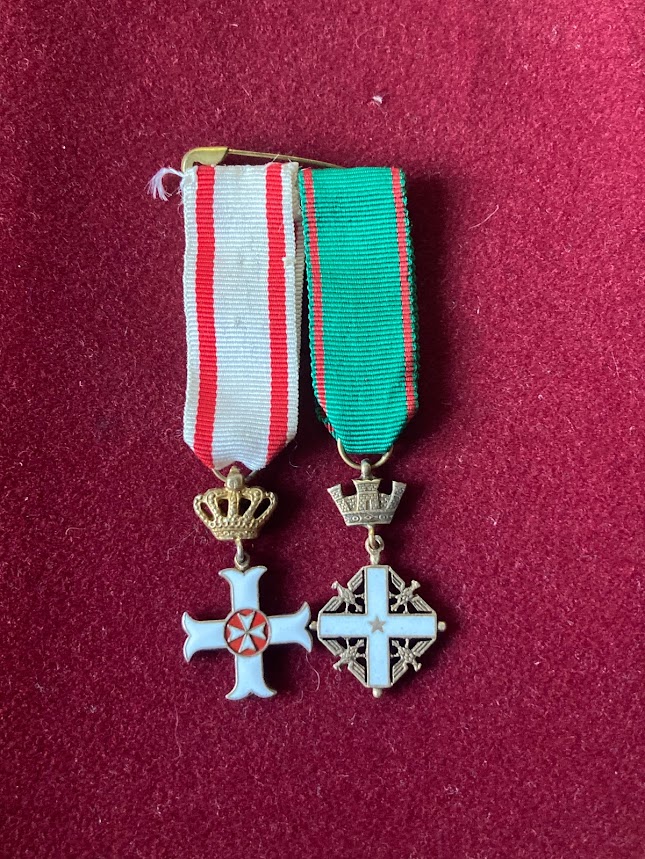
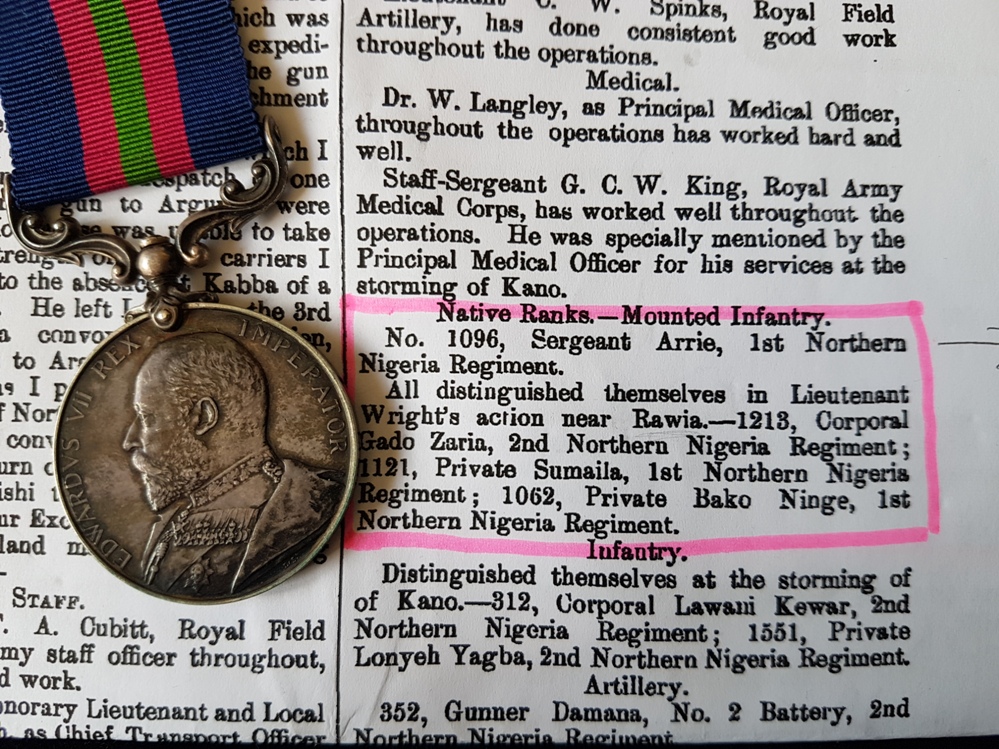
Description The exceptional and well documented Anglo Boer War Distinguished Conduct Medal group to the Imperial Yeomanry. Distinguished Conduct Medal (1st type obverse) named to S. MAJOR. A. C. SANDFORD. IMP. YEO. Swing mounted with Queen’s South Africa medal (Cape Colony, Transvaal and Wittebergen clasps named to 6464 Q.M. SJT. A. C. SANDFORD. 35TH COY. 11TH IMP. YEO. This pair is with a separate, original length of ribbon on which the 1899 1902 brass type clasp attached. D.C.M. Gazetted – London Gazette 19th April 1901, No 27306, pp 2707. He had originally served for 5 years and 194 days in the 11th Hussars having purchased himself out. He re-joined, into the Imperial Yeomanry (No 6464), aged 23 years, on the 12th January 1900. He was discharged, medically unfit for further service, 25th July 1901. His papers confirm – Awarded Distinguished Conduct Medal for gallantry at Woodside near Vrede on 19th Nov. 1900 in returning under a heavy fire and bringing away a scout. The Middlesex Yeomanry in South Africa – the 35th Imperial Yeomanry had been inspected by the King (then Prince of Wales) at Albany Strect Barracks they left London and sailed for South Africa in February, 1900. From commencement they had an adventurous time. Life on the veldt alone would form a most interesting story. The Middlesex Yeomanry were continually fighting, and engaged in upward of a hundred actions, losing something per 40%. in.killed, wounded, and death from enteric fever. Following action at Thaba N’Chu, their next engagement was at Senekal under General Rundle, where the Middlesex Yeomanry lost heavily, Major Dalbiac and four men being killed and six wounded. They were next involved at the Battle of Biddulphberg. The 35th Company were then selected to join General Clements and served with Brabant’s Horse during the advance and capture of Bethlehem. They also took part in the big fight at Slabberts Nek and the capture of Fouriesburg. For weeks afterwards fighting was almost a daily occurrence. On December 6th the company left Harrismith with 17th Brigade under General Bayes, operating in the Reitz and Senekal district. (source Belfast Evening Telegraph 27th August 1902 pp 04) Description of the DCM action can be seen in the obituary of his rescuee as reported in the Belfast Evening Telegraph 27th August 1902 pp 04 – as follows – It was at this time, during an attack on a Boer position, that Spicer, together with a comrade, was scouing in front of the column and took up a position in front of a Kaffir kraal within three hundred yards of the Boers. The Boers at once opened fire, and the two friends were unable to get away; the other. however, managed to escape and to reach the main body of the squadron, when Sergeant Major Sandford. on hearing of Spicer’s plight, pluckily rode down with a led horseled and rescued him, for this act obtaining him the distinguished conduct medal. Notice of his death was given in the following journal: West London Observer Friday 09 December 1904 – PRIMROSE LEAGUE – Hammersmith Knights Habitation Meeting – Hon. Sec. Alfred Selden mentioned that in reply to a notice sent out be had received an intimation of the death of Mr. Arthur Charles who Sandford, a member of the habitation, who in the served with the Imperial South African war, and was severely injured by his horse falling on him Orange River Colony. He was afterwards awarded the distinguished conduct medal for a man named Spicer. He was awarded a pension for life, but only lived a comparatively short time to enjoy it. It was resolved that the death of Mr Sandford should be recorded on the minutes. THE MURDER OF SPICER Ironically the rescuee was murdered in London on the night of celebrations of the end of the war. It was reported in the Obituary of the murdered Spicer – Belfast Telegraph – Wednesday 27 August 1902, page 4. With sketch portrait. The murder of Spicer is well documented and has been comprehensively researched. HOOLIGAN OUTRAGE. – A Brutal Tragedy in London. – IMPERIAL YEOMAN ATTACKED AND KILLED. Another ghastly murder by Hooligans has to be recorded to the disgrace of the Metropolis. And this time the victim was none other than Mr. H. Murray Spicer, a nephew of the head of the famous paper-making firm, and himself celebrated as one of the bravest among the Imperial Yeomanry. Mr. Spicer, whose home was in Godalming, and who had lodged in a Russell-square boarding-house, returned from South Africa bearing a wounded foot as a mark of his work on the battlefield. Then he quietly resumed his duties in the country department of the house. Monday night, with the wild celebration of peace, saw him out in the streets with a party of fellow-clerks, and with them Mr. Budibent, a friend and fellow-lodge of Mr. Spicer. The party spent that very merry night just in the usual way. Midnight found them at Charing Cross, and there they said “good-bye.” Mr. Spicer and Mr. Budibent starting across Trafalgar-square, apparently for Tottenham Court-road, which in due course would lead them to the neighbourhood of Russell-square. How Mr. Spicer and Mr. Budibent found their way into Euston-road has yet to be explained. But the accepted theory is that they were swept along by the crowd, which at this point was very rough and extremely noisy. Down the Euston-road they went until, approaching Endsleigh-gardens, they stopped. And in that moment three men stepped out of the shadows, and the two friends were fighting for their lives. Mr. Budibent, breaking loose, stretched his assailant with two powerful blows. Even as the beaten man crawled away, a scream from Mr. Spicer brought Mr. Budibent to his side as the other two men scampered away in the van. In the hand of one of the men swung a belt. Down Mr. Spicer’s face the blood poured from a hideous gash in the eye, where the buckle of the belt had struck. Every cab that passed was full of riotous celebrants; no policeman was to be found, and for nearly an hour Mr. Spicer lay bleeding and insensible before he was carried to the University Hospital. There, spite of an operation by Mr. Victor Horsley, he died in the dawn of Wednesday. The buckle of the belt had penetrated the brain. So far the police are absolutely without the shadow of a clue to the identity of the slayers, and the chances of their escape are manifold. Evening Express, Friday 6th June 1902 KILLED BY LONDON ROUGHS. Sandford’s brother, Richard, served in the Canadian Infantry. Richard died of wounds at No 20 Casualty Clearing Station No 20 having served in France for 3 years. He had moved to Canada in 1913. The article announcing his death on the Western Front was in the Toronto Star, October 9th 1918. The article continues the “A brother, Arthur Charles, was a South African veteran and during that campaign won the D.S.O., was recommended for the V.C. by Lord Roberts and was awarded the service medal with 4 bars attached. He died upon reaching home”. Comes with miniatures and a King Edward Grateful Remembrance medal. The British War Medal of Richard Sandford, 13th Canadian Infantry is also included in the lot. Please contact us to agree shipping method and costs. Price is ex Office Gate – all forwarding, import and export tax to be paid by buyer. Overseas buyers are requested to contact us prior to agree terms and conditions. Jonathan Godwin, 07765 595662, email – [email protected]
Gallantry Medals